
Sewage backup in your home: health risks and what to do first
By Diego Marsh · Updated 2026-06-30
This is general information, not medical advice. If you or a household member develops symptoms after sewage exposure, contact a healthcare provider.
A sewage backup is one of the few plumbing problems that’s a health issue first and a repair issue second. Water damage from a burst pipe is unpleasant. Water damage from a backed-up sewer line carries bacteria, viruses, and parasites that a shop vac and some paper towels won’t handle safely. Knowing what you’re actually dealing with changes how you respond in the first hour.
Why sewage backup is different from other water damage
Raw sewage is classified as “black water,” the most contaminated category of water damage. It can carry E. coli, salmonella, hepatitis A, and intestinal parasites, along with mold spores that start developing within 24 to 48 hours in wet drywall and carpet padding. Skin contact can cause rashes and infections, especially through cuts or scrapes, and breathing in aerosolized particles or later mold growth can trigger respiratory irritation.
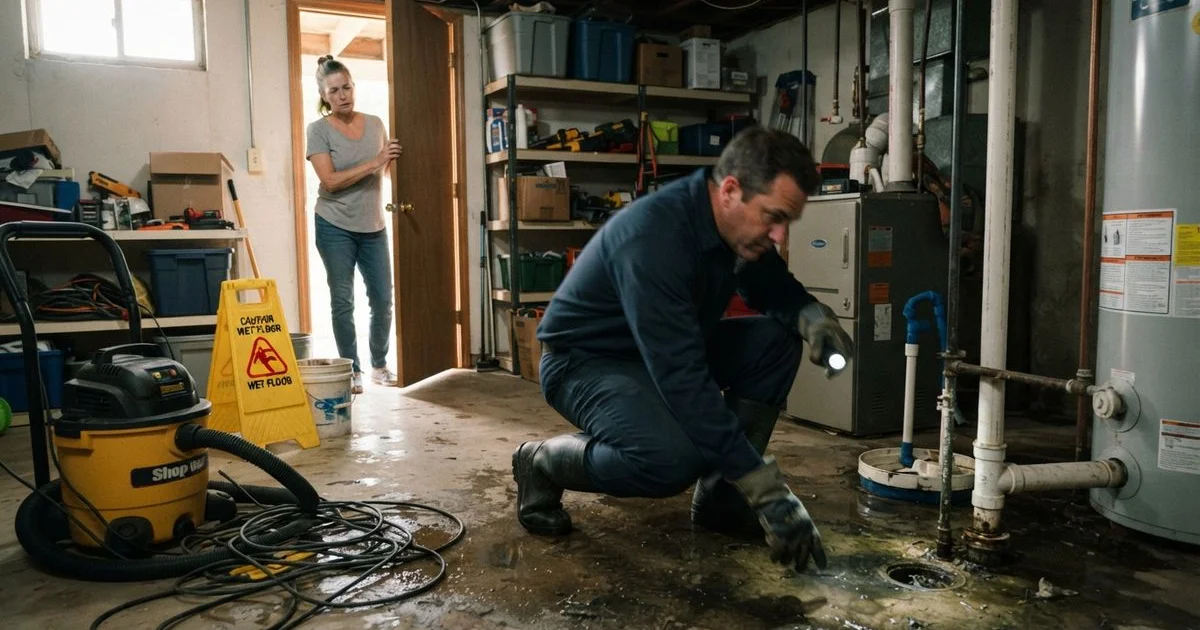
This is why a plumber or restoration crew working a sewage backup wears different protective gear than they would for a clean water leak: gloves, boots, and often respirators, not just because it’s unpleasant, but because the exposure risk is real.
What to do in the first few minutes
If sewage is backing up into your home:
- Keep children, pets, and anyone with a compromised immune system out of the affected area entirely.
- Stop using any fixtures on the same line, toilets, sinks, showers, the more water you run, the worse the backup can get.
- Turn off electricity to the affected area at the breaker if water is anywhere near outlets or appliances, without stepping into standing water to do it.
- Avoid direct contact with the water. If you must be in the room, wear rubber gloves and boots, and wash thoroughly afterward.
- Call a plumber who handles sewage backups, not a general handyman, and mention that it’s a sewage backup specifically so they bring the right equipment.
One-time clog or a bigger problem
Not every backup means your sewer line is failing. A single blocked toilet or slow kitchen drain is usually a localized clog. What points toward a bigger issue is backup in more than one fixture at once, gurgling sounds from drains you aren’t using, or a pattern of repeat backups over weeks or months. Those symptoms usually mean the problem is further down the line, root intrusion, a bellied section, or a collapsed pipe, rather than something stuck in one drain.
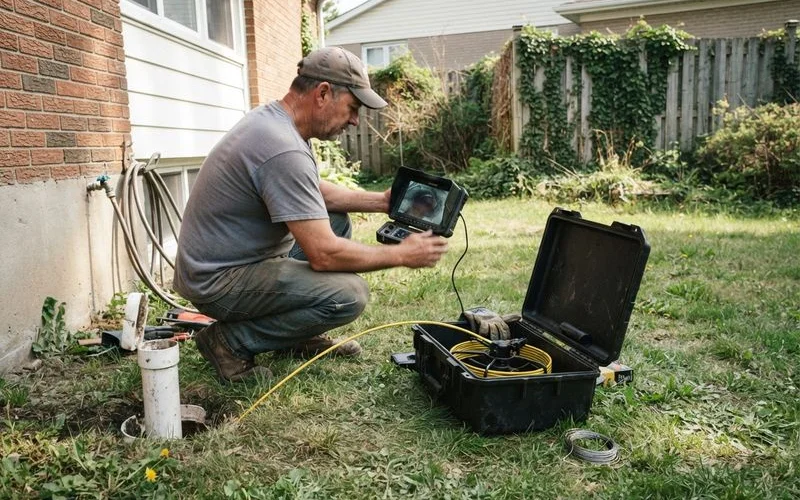
A drain and sewer cleaning provider can run a camera down the line to see exactly what’s going on before recommending a fix, which beats guessing based on symptoms alone. Our guide to what happens during that visit walks through the diagnosis and clearing steps once the plumber arrives. If the camera turns up a bellied section or a collapsed run rather than a simple clog, that’s a repair-versus-replacement conversation, not another cleaning.
Cleanup: when to call it and when to call a pro
| Situation | Reasonable to handle yourself | Call a professional |
|---|---|---|
| Small spill, hard floor, caught immediately | Often yes, with gloves and proper disposal | If unsure, still worth a call |
| Water touched carpet, rugs, or upholstery | No | Yes, these usually can’t be fully decontaminated |
| Water reached drywall or subfloor | No | Yes, materials may need to be removed |
| Repeat or ongoing backup | No | Yes, get a camera inspection before more cleanup |
| Anyone in the home is sick, pregnant, elderly, or immunocompromised | No | Yes, exposure risk is higher |
After the cleanup
Even after visible sewage is gone, the area needs to actually dry out and be disinfected, not just look clean. Damp drywall, insulation, and subflooring left in place invite mold within a couple of days. If a restoration company handled the cleanup, ask what moisture readings they took and when they consider the area fully dry, rather than assuming a quick mop-up is the end of it.
Check your homeowners insurance policy before you assume the cleanup is covered. Sewer backup is commonly excluded from standard policies unless you’ve added a specific rider, so this is worth confirming with your agent ahead of time, not in the middle of an emergency.
A sewage backup calls for speed and the right precautions, not panic. Keep people and pets clear, shut off water use on that line, and bring in a plumber who treats it as the health issue it is. For more on how local providers are scored for jobs like this, see our methodology, or head back to the home page to browse other plumbing categories.
Common questions
- Is it safe to clean up sewage backup myself?
- For a small, contained spill on a hard floor, careful cleanup with gloves and proper disposal may be reasonable. Anything that has soaked into carpet, drywall, or subfloor should be handled by a professional, since the contamination goes deeper than a surface wipe can reach.
- What are the actual health risks from sewage exposure?
- Raw sewage carries bacteria like E. coli, viruses, and parasites that can cause gastrointestinal illness, skin infections, and respiratory irritation from mold that develops afterward. Children, older adults, and anyone with a weakened immune system face higher risk.
- How do I know if a backup is a one-time clog or a bigger sewer line problem?
- Repeated backups, backups in multiple drains at once, or gurgling in fixtures that aren't in use usually point to a main line problem rather than a single clogged drain. A camera inspection is how a plumber confirms which one it is.
- Will my homeowners insurance cover sewage backup cleanup?
- Standard homeowners policies often exclude sewer backup unless you've added a specific endorsement or rider for it. Check your policy or call your agent before assuming the cleanup cost is covered.