
Buying an older home in Conway: plumbing red flags to check before you close
By Diego Marsh · Updated 2026-07-23
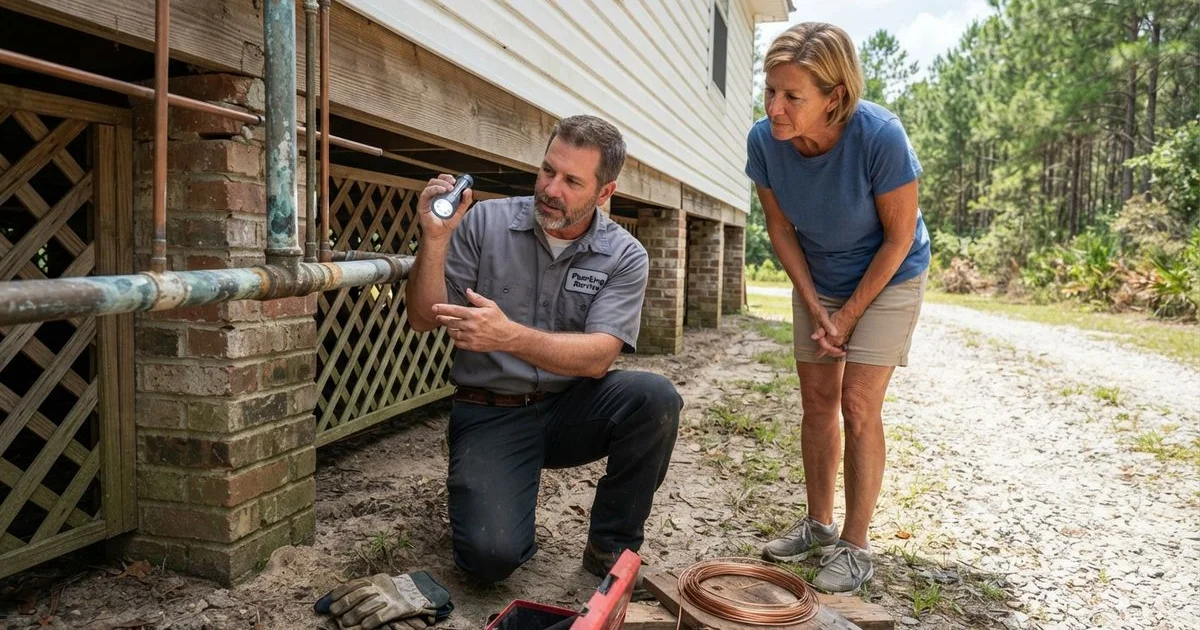
Conway’s housing stock ranges from decades-old homes near the historic district to newer construction further out toward Highway 501, and the plumbing behind an older home’s walls doesn’t always match its updated kitchen or fresh paint. A few specific checks before closing can save a nasty surprise a few months into ownership.
Pipe material: the single biggest factor
What the supply lines are made of tells you more about future problems than almost anything else:
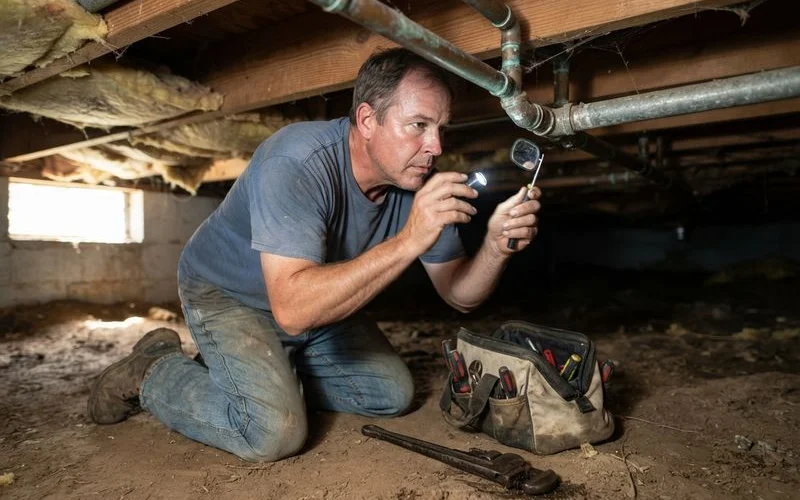
- Galvanized steel: common in homes built before the 1960s, this pipe corrodes from the inside over time, which shows up as reduced water pressure and eventually leaks or failure. If a home still has its original galvanized lines, budget for eventual repiping rather than treating it as a maybe. That kind of failure tends to show up suddenly rather than gradually; the plumbing emergency guide covers what actually counts as urgent if it happens after you’ve moved in.
- Older copper: generally more durable, but early installations can still develop pinhole leaks after decades, especially in areas with aggressive water chemistry.
- Cast iron drain lines: durable but prone to corrosion and cracking with age, and root intrusion is a common issue in older cast iron sewer lines, particularly with mature trees nearby.
- PEX or updated copper: a sign of more recent repiping, generally a good sign if the rest of the home is original.
A plumber or thorough home inspector can usually identify pipe material by looking where it’s visible, in a crawlspace, basement, or under a sink, without needing to open walls.
Water pressure and flow
Low water pressure in an older home isn’t always about the municipal supply, it’s often a sign of corroded galvanized pipe narrowing from the inside. Run multiple fixtures at once during a showing (a shower and a sink, for instance) and see if pressure drops noticeably. That’s a simple, free test that can reveal a problem a quick single-faucet check would miss.
Water heater age
Check the manufacture date on the water heater’s data plate, most tank units last 8 to 12 years. A unit near or past that range in an older home you’re buying is a near-term expense to plan for, not necessarily a dealbreaker, but worth factoring into your offer or your first-year budget.
Sewer line condition
For homes with mature trees near the sewer line’s path, root intrusion is a real risk, and it isn’t something a standard visual home inspection catches. A camera inspection of the sewer line is a reasonable ask before closing, particularly for a home built before the neighborhood’s trees were young. If it does turn up a bellied or root-damaged section, that becomes a repair-versus-replacement decision worth pricing out before you close, not after.
A pre-closing checklist
| Check | What it tells you |
|---|---|
| Pipe material (visible in crawlspace or under sinks) | Galvanized signals likely future repiping; copper or PEX is a better sign |
| Water pressure with multiple fixtures running | Reveals narrowing from corrosion that a single-tap test misses |
| Water heater manufacture date | Flags a near-term replacement expense |
| Camera inspection of the sewer line | Catches root intrusion or a bellied pipe a visual check can’t |
| Visible water stains or soft spots near plumbing fixtures | Signals a past or ongoing leak worth investigating further |
Should you get a dedicated plumbing inspection
A standard home inspection covers plumbing at a general level, but it isn’t the same as a focused plumbing evaluation. If the general inspection turns up low pressure, visible corrosion, or an aging water heater, it’s worth bringing in a plumber for a more specific look before you finalize your offer. That inspection is a small cost relative to discovering a repiping job is needed a few months after closing.
Using what you find
If red flags do show up, they’re not necessarily reasons to walk away, they’re negotiating points. Get a rough repair or repiping estimate and use it either to adjust your offer or to plan realistically for what the first year or two of ownership will cost beyond the mortgage. Buying an older Conway home with eyes open on the plumbing is a very different position than being surprised by it later.
For how we evaluate the plumbers who can do this kind of pre-purchase inspection work, see our methodology, and visit the home page to browse plumbing categories in Conway.
Common questions
- How do I know what pipe material an older Conway home has?
- A licensed home inspector or plumber can identify it during a walkthrough, often visible where pipes are exposed in a crawlspace, basement, or under a sink. Galvanized steel, older copper, and original cast iron are the main things to watch for in Conway's older housing stock.
- Is galvanized pipe a dealbreaker?
- Not necessarily a dealbreaker, but it's a real factor. Galvanized pipe corrodes from the inside over decades, which reduces water pressure and eventually fails. If a home still has original galvanized supply lines, budget for eventual repiping rather than being surprised by it later.
- Should I get a separate plumbing inspection beyond the standard home inspection?
- For an older home, it's worth considering, especially if the standard inspection flagged low water pressure, visible corrosion, or an aging water heater. A plumber can do a more focused evaluation than a general home inspector's walkthrough.
- What's a reasonable way to budget for plumbing surprises in an older home?
- Get a rough estimate for repiping or major repairs before closing if red flags show up, and treat that number as a negotiating point or a line item in your post-purchase budget, rather than assuming it'll be fine.